What causes heavy legs? From everyday habits to medical conditions
Heavy legs usually have an everyday explanation, such as standing all day, sitting still on a long journey or a spell of hot weather. Sometimes, though, the feeling points to a condition that a GP should assess: varicose veins, chronic venous insufficiency, lymphoedema, lipoedema, a heart or kidney problem, or a blood clot. This page goes through the main causes, so you can recognise which ones are part of daily life and which need a professional opinion, here in the UK through your GP, pharmacist or NHS 111.
How blood gets back up from the legs
Blood in the leg veins has to travel upwards against gravity, helped by one-way valves inside the veins and by the calf muscles, which act as a pump each time you walk. Anything that slows this return can make the legs feel heavy.
When you stand still for hours, the calf pump is barely used. When you sit with bent knees and hips, as on a plane or at a desk, blood flow in the legs slows. Alongside the veins, the lymphatic system collects excess fluid from the tissues and returns it to the bloodstream. Problems with either system can lead to a feeling of heaviness and, sometimes, visible swelling.
Everyday causes
The most frequent causes are long periods of standing or sitting, hot weather, pregnancy, being overweight and a lack of physical activity. Salty meals, tight clothing and high heels are also often mentioned.
| Cause | Why it plays a part |
|---|---|
| Standing jobs (retail, hospitality, hairdressing, nursing, teaching) | Little calf pump activity for hours at a time |
| Long sitting (desk work, driving, flights) | Slower blood flow in the legs |
| Hot weather | Veins widen in the heat |
| Pregnancy | Hormonal changes and pressure from the womb on the pelvic veins |
| Excess weight | Extra pressure on the leg veins |
| Inactivity and ageing | Weaker calf muscles and vein walls that lose elasticity |
These causes are common, and simple habits often make a difference. Our page of everyday tips covers them in practice.
Varicose veins and venous insufficiency
Varicose veins are swollen, twisted veins, usually in the legs, caused by weakened valves that let blood flow backwards and pool. According to the NHS, they can cause aching, heavy or uncomfortable legs, swollen ankles and itching.
The NHS lists factors that make varicose veins more likely: being female, a family history, older age, being overweight, a job that involves long periods of standing, and pregnancy. When the valve problem becomes more established, doctors speak of chronic venous insufficiency, which can lead to skin changes around the ankles, such as brown discolouration, hardening or eczema, and eventually to leg ulcers.
NICE guidance (CG168) recommends that people with symptomatic varicose veins, skin changes, a previous superficial vein thrombosis or a leg ulcer be referred to a vascular service. Effective treatments exist, from compression to minimally invasive procedures. A food supplement is not one of them.
Lymphoedema and lipoedema
Lymphoedema is long-term swelling caused by a problem with the lymphatic system; lipoedema is a build-up of fat, mainly in the legs, that mostly affects women. Both are medical conditions that need a diagnosis.
Lymphoedema can be present from birth (primary) or develop after damage to the lymph nodes or vessels (secondary), for example after cancer surgery or radiotherapy, an infection or an injury. The NHS describes swelling that may come and go at first, a feeling of heaviness or tightness, and repeated skin infections. Specialist lymphoedema services offer treatment such as compression, skin care, exercise and massage techniques.
Lipoedema typically affects both legs symmetrically, often sparing the feet, and may be painful or bruise easily. It is often mistaken for ordinary weight gain. If either description sounds familiar, see your GP rather than trying to manage it yourself.
Medicines and other medical causes
Some medicines and some diseases of the heart, kidneys or liver can cause ankle and leg swelling, which may come with a feeling of heaviness.
The NHS lists among possible causes blood pressure medicines (such as some calcium channel blockers), the contraceptive pill or HRT, some antidepressants and steroids. Never stop a prescribed medicine on your own: speak to your GP or pharmacist, who can look for an alternative if needed. Heart failure, kidney disease and liver disease can all cause swelling of both legs, usually with other symptoms such as breathlessness or tiredness. Leg pain when walking that eases with rest may instead point to narrowed arteries (peripheral arterial disease), which is a different problem.
Blood clots: the cause not to miss
A deep vein thrombosis (DVT) is a blood clot in a deep vein, usually in the leg. Swelling, throbbing pain, warmth and red or darker skin in one leg are warning signs: get help from NHS 111 now, and call 999 if you are breathless or have chest pain.
Risk is higher after surgery, during long periods of immobility or bed rest, in pregnancy and after giving birth, with some hormonal treatments, with cancer, and in people who have had a clot before. The full list of warning signs and who to contact is on our page about when to see a GP.
Frequently asked questions
Can my blood pressure tablets make my legs feel heavy?
Some blood pressure medicines, particularly certain calcium channel blockers such as amlodipine, can cause ankle swelling. Do not stop them yourself. Mention it to your GP or pharmacist, who can review your treatment.
Is it normal to have heavy legs in pregnancy?
It is common, especially later in pregnancy. But sudden swelling of the face, hands or feet, with headache or vision problems, can be a sign of pre-eclampsia: contact your midwife, maternity unit or NHS 111 straight away. LymphActiv is not recommended during pregnancy or breastfeeding.
Where can I get lymphoedema treatment in the UK?
Your GP can refer you to a local NHS lymphoedema service. Charities such as the Lymphoedema Support Network also provide information for patients.
Could a supplement be hiding a medical cause?
It could, if you used it instead of getting advice. That is why we say clearly that LymphActiv is not a treatment, and why persistent or unusual symptoms should always be checked by a GP. You can read what LymphActiv contains on the LymphActiv ingredients page, and our hub on heavy legs brings everything together.
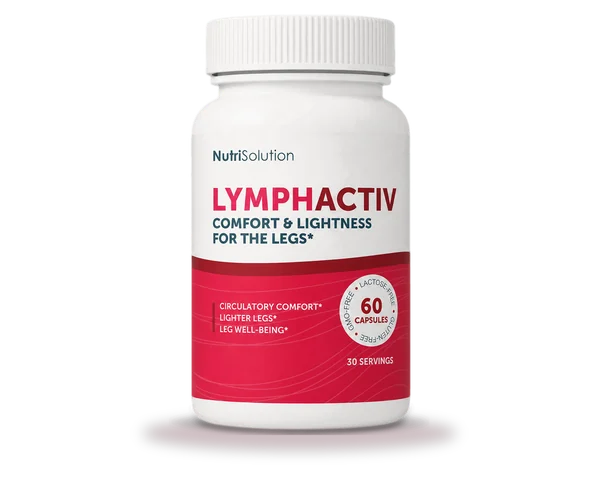
LymphActiv: 7 ingredients, 2 capsules a day
- Red vine leaf (360 mg), dandelion (300 mg), bromelain (200 mg)
- Maritime pine bark (142.5 mg OPC) and horse chestnut (20 mg aescin)
- Vitamin C, which contributes to normal collagen formation for the normal function of blood vessels, and vitamin E
- 180-day money-back guarantee, only through the official order page
Sources
- NHS: Varicose veins (nhs.uk).
- NHS: Swollen ankles, feet and legs (oedema) (nhs.uk).
- NHS: Lymphoedema (nhs.uk).
- NHS: Lipoedema (nhs.uk).
- NHS: Deep vein thrombosis (DVT) (nhs.uk).
- NHS: Peripheral arterial disease (PAD) (nhs.uk).
- NICE (2013): Varicose veins: diagnosis and management, clinical guideline CG168.