Dandelion leaf: a traditional herb, honestly assessed
Dandelion is the yellow-flowered plant that turns up in every British lawn and verge, and its leaves have been used in European herbal traditions for centuries. Two LymphActiv capsules contain 300 mg of dandelion leaf extract. Here we explain its traditional reputation, the small amount of human research behind it, and the one warning that matters most: dandelion belongs to the daisy family, so anyone allergic to these plants should not take LymphActiv.
What dandelion leaf is
Dandelion (Taraxacum officinale) is a perennial plant of the Asteraceae family, the same family as daisies, chamomile, marigolds and ragweed. Both the root and the leaf are used in herbal products; LymphActiv contains an extract of the leaf.
The leaves are edible and appear in salads in France and Italy. They are naturally rich in potassium and contain bitter compounds called sesquiterpene lactones, along with flavonoids and phenolic acids. These bitter substances explain both the taste and part of the plant's traditional reputation as a digestive herb.
| Point | In practice |
|---|---|
| Botanical name | Taraxacum officinale, leaf |
| Amount in LymphActiv | 300 mg per 2 capsules |
| Plant family | Asteraceae (daisy family) |
| Authorised health claim | None: we make no claim for this plant |
A long traditional use
Dandelion has been used traditionally across Europe in connection with urine flow, which is why old English country names for it include "pissabed", echoing the French "pissenlit". Tradition is not proof, and we present it only as history.
The European Medicines Agency's herbal committee (HMPC) has reviewed dandelion and recognises a traditional use for some herbal medicinal preparations, based on long-standing use rather than clinical trials. That status applies to registered herbal medicines with defined preparations and doses. LymphActiv is a food supplement, not a herbal medicine, so it cannot borrow those indications, and we do not.
What the human research shows
Human data on dandelion leaf are very limited: the study most often quoted is a small pilot with 17 volunteers over a single day. That is far too little to draw firm conclusions about anything.
In this pilot, published by Clare and colleagues in 2009, healthy volunteers took a dandelion leaf preparation and recorded the volume and frequency of their urine. The authors reported some changes after certain doses, and themselves called for larger studies. Most other research on dandelion has been carried out in the laboratory or in animals. In short, the research suggests the plant is worth studying, nothing more.
Its place in LymphActiv
Dandelion leaf is the second largest ingredient in LymphActiv after red vine leaf, chosen as a plant traditionally used in European herbalism. It is not presented as the active "reason" for the product.
The only authorised health claims for LymphActiv relate to its vitamins: vitamin C contributes to normal collagen formation for the normal function of blood vessels, and vitamins C and E contribute to the protection of cells from oxidative stress. The full list of ingredients and amounts is on our LymphActiv ingredients page, and an overview of the product is on the home page.
The Asteraceae allergy warning
The LymphActiv label states that it is not recommended for people with a known cross-allergy, particularly to plants of the Asteraceae family. That warning exists because of dandelion.
If you react to ragweed, chamomile, chrysanthemums, marigolds, echinacea or daisies, for example with hay fever, skin rashes or swelling, you may also react to dandelion. Allergic reactions to plant extracts are uncommon, but they can be serious. If you develop a rash, itching, swelling of the lips or face, or difficulty breathing after taking any supplement, stop it straight away; swelling of the face or breathing difficulty is an emergency, so call 999.
Medicines and other precautions
Because of its traditional association with urine flow and its potassium content, dandelion is discussed in the literature alongside diuretics ("water tablets"), lithium and some antibiotics. These interactions are theoretical or poorly documented, but they justify a quick check with a professional.
The label also advises against LymphActiv in cases of biliary obstruction, gastric or duodenal ulcer, and oedematous heart or kidney failure, and for under-18s and pregnant or breastfeeding women. If you take any regular medication or have a medical condition, consult a healthcare professional before use. The full list is on our side effects and precautions page.
Frequently asked questions
I have hay fever in the UK summer. Can I take LymphActiv?
Hay fever is most often caused by grass and tree pollen, which is not the same as an Asteraceae allergy. But if you know you react to ragweed, mugwort, chamomile or similar plants, do not take LymphActiv. If you are unsure what you are allergic to, ask your GP or pharmacist first.
I take water tablets prescribed by my GP. Is dandelion a problem?
Diuretics are prescribed for conditions such as high blood pressure or heart failure, and the label advises against LymphActiv in oedematous heart failure. Do not add any supplement without asking your GP or pharmacist, who can check it against your prescription and your latest blood tests.
Can I just eat dandelion leaves from my garden instead?
Young dandelion leaves are edible, but only pick them away from roads, pets and lawn treatments. Eating them is a matter of food, not of supplements, and the same Asteraceae allergy caution applies.
Is dandelion regulated as a medicine by the MHRA?
Some dandelion products can be registered with the MHRA under the Traditional Herbal Registration scheme, which makes them herbal medicines. LymphActiv is not one of them: it is sold as a food supplement and makes no medicinal claims.
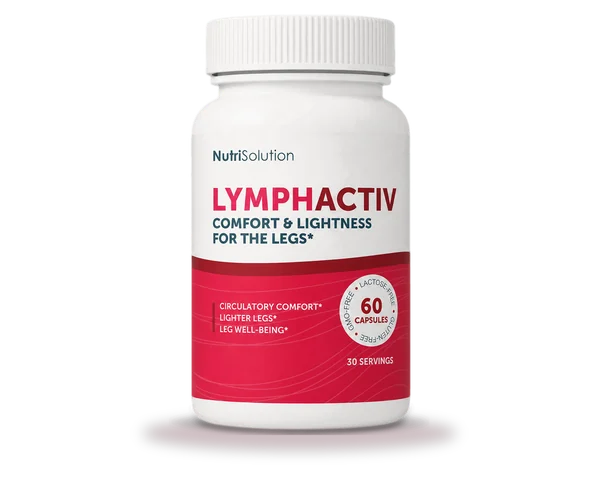
LymphActiv: 7 ingredients, 2 capsules a day
- Red vine leaf (360 mg), dandelion (300 mg), bromelain (200 mg)
- Maritime pine bark (142.5 mg OPC) and horse chestnut (20 mg aescin)
- Vitamin C, which contributes to normal collagen formation for the normal function of blood vessels, and vitamin E
- 180-day money-back guarantee, only through the official order page
Sources
- European Medicines Agency, HMPC: European Union herbal monographs on Taraxacum officinale Weber ex Wigg. (traditional use).
- Clare BA, Conroy RS, Spelman K (2009): The diuretic effect in human subjects of an extract of Taraxacum officinale folium over a single day. J Altern Complement Med 15(8).
- MHRA: Traditional Herbal Registration scheme (gov.uk).
- NHS: Allergies and Anaphylaxis (nhs.uk).
- LymphActiv official label (composition and precautions).